How to Stop a Nosebleed the Right Way (and What Not to Do)
Lean forward, pinch the soft part of your nose and hold firm pressure without peeking. Here is the step-by-step method doctors recommend, the myths to skip, and when a nosebleed needs care.

The short version
- At least 60% of people get a nosebleed at some point. Most stop at home with the right first aid.
- Sit up, lean forward and pinch the soft lower part of your nose firmly. Keep the pressure on for at least 10 minutes without letting go to check.
- Do not tilt your head back. Blood runs down the throat and can make you cough or vomit.
- Get care if bleeding lasts past 20 minutes of steady pressure, follows a head injury, or keeps coming back.
Nosebleeds look dramatic, but they are one of the most common things that happen to a nose. According to the 2020 national guideline written for doctors, at least 60 percent of people in the United States get one at some point, and only about 6 percent of them ever need medical help. The rest stop at home, as long as you use the right technique.
Where do most nosebleeds come from?
Most come from the front of the nose, on the wall between the nostrils. This spot has a dense web of tiny blood vessels sitting just under a thin lining. When that lining dries out, cracks or gets scratched, a vessel breaks and bleeds.
Common triggers include:
- Dry indoor air from heating in winter
- Picking or rubbing the nose
- Blowing hard during a cold or allergy season
- Colds and sinus infections that irritate the lining
- Some medicines, including blood thinners and overused decongestant sprays
How do you stop a nosebleed?
Sit up, lean forward and pinch the soft part of your nose firmly for at least 10 minutes. That's the core of it. Here is the full method:
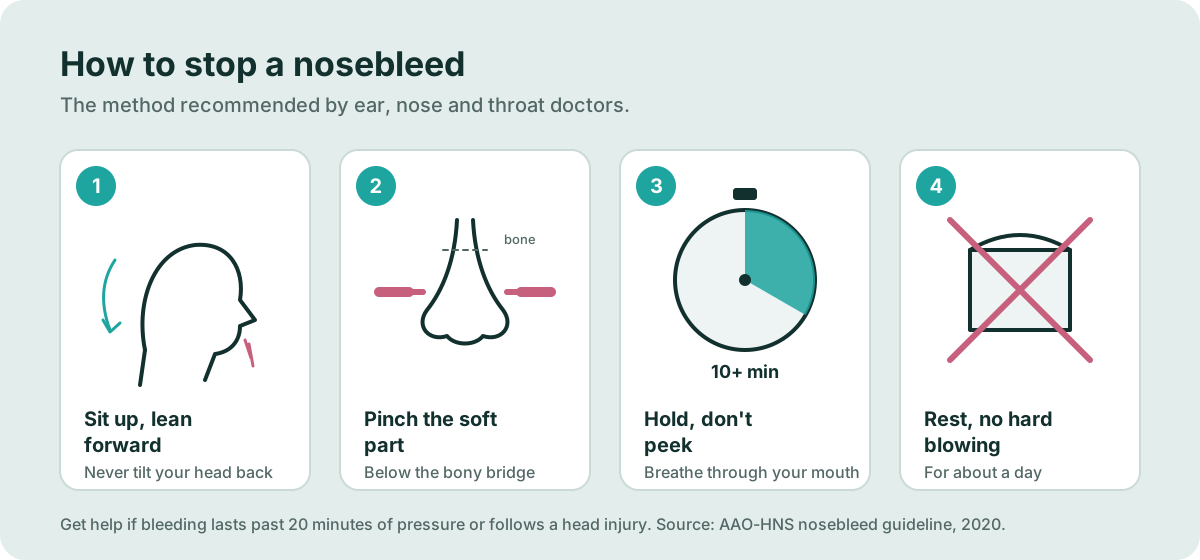
- Sit up straight and lean slightly forward. Keeping your head above your heart lowers pressure in the vessels, and leaning forward lets blood drain out instead of down your throat.
- Pinch the soft part of your nose. Use your thumb and index finger to squeeze both nostrils closed just below the hard, bony bridge. Pressing on the bone does nothing; the bleeding spot is lower down.
- Hold firm pressure and don't peek. Breathe through your mouth and keep squeezing for a full 10 minutes by the clock. The national guideline tells doctors to start with firm, sustained compression of the lower third of the nose, and letting go to check is the most common reason bleeding starts again.
- Rest afterward. For the next day or so, avoid blowing your nose, heavy lifting, bending over and hot drinks, which can all dislodge the fresh clot.
A cold pack on the bridge of the nose can feel soothing, but it is no substitute for pinching.
What should you not do?
| Myth | Why to skip it |
|---|---|
| Tilt your head back | Blood runs down the throat, which can cause coughing or vomiting and hides how much you are bleeding |
| Lie flat | Same problem as tilting back |
| Stuff tissue deep into the nostril | Pulling it out can tear the clot and restart bleeding |
| Check every minute | Each release lets the clot break |
| Blow hard right after | The clot is fragile for several hours |
How can you prevent nosebleeds?
Keep the lining of your nose moist. Dry, cracked tissue bleeds easily, which is why nosebleeds cluster in winter. A study of 476 emergency visits in New Brunswick, Canada, found the most nosebleeds happened in winter, and visits rose as daily humidity fell.
- Run a humidifier in your bedroom when the heat is on
- Use saline spray or an oil-based nasal moisturizer to keep the lining supple
- Keep fingernails short, especially for kids who pick
- Blow gently, one nostril at a time

When should you get medical help?
Call your doctor or get urgent care if:
- Bleeding keeps going after 20 minutes of steady pressure
- The bleeding is heavy, or you feel dizzy, faint or short of breath
- It started after a blow to the head or face
- You take blood thinners and can't get it to stop
- Nosebleeds happen often, come from the same side each time, or come with a blocked nose on one side
Frequent nosebleeds are worth a check even when each one is small. A doctor can look for a fragile vessel that can be treated, and can review your medicines.
Common questions
Should you tilt your head back for a nosebleed?
No. Tilting back sends blood down the back of the throat, which can cause coughing, choking or vomiting and hides how much you are bleeding. Sit up and lean slightly forward instead, so blood drains out the front of the nose.
How long should you pinch your nose for a nosebleed?
Hold firm pressure on the soft part of the nose for at least 10 minutes without letting go to check. The national guideline for doctors recommends firm, sustained compression of the lower third of the nose. Releasing early lets the clot break and the bleeding restart.
Why does my nose bleed so easily in winter?
Dry indoor air dries and cracks the lining at the front of the nose, where small blood vessels sit close to the surface. Studies from Canada link colder weather and lower humidity to more nosebleed visits. A humidifier and a nasal moisturizer help keep the lining supple.
When is a nosebleed an emergency?
Call for help if bleeding is heavy or won't stop after 20 minutes of steady pressure, follows a blow to the head or face, causes dizziness or trouble breathing, or happens while you take blood thinners. Frequent nosebleeds should also be checked by a doctor.
Sources
- Clinical Practice Guideline: Nosebleed (Epistaxis). Otolaryngology – Head and Neck Surgery, 2020
- Plain Language Summary: Nosebleed (Epistaxis). Otolaryngology – Head and Neck Surgery, 2020
- Examining seasonal variation in epistaxis in a maritime climate. Journal of Otolaryngology – Head & Neck Surgery, 2019
Articles are for general information, not medical advice. See a doctor for symptoms that are severe, persistent, or one-sided. Last updated October 26, 2026.