Why Your Nose Gets So Dry in Winter, and What Actually Helps
Cold outdoor air and radiator heat strip moisture from the lining of your nose. Here is what the research says about winter dryness, nosebleeds, and the simple habits that keep nasal passages comfortable.
The short version
- Your nose warms and humidifies every breath. Cold, dry air makes that job harder and can leave the lining dry, crusty and sore.
- Studies from Canada link colder temperatures and lower humidity to more emergency visits for nosebleeds.
- A bedroom humidifier, steady hydration and a nasal moisturizer are the usual first steps for everyday dryness.
- See a doctor for bleeding that won't stop after 20 minutes of firm pressure, frequent one-sided bleeding, or bleeding after an injury.
Every breath you take passes over a surprisingly hard-working surface. The lining of your nose warms incoming air toward body temperature and adds moisture to it before it reaches your lungs. In summer that is easy. In January, when the air outside is freezing and the air inside has been baked dry by a furnace or radiator, the lining gives up more water than it can replace.
The result is the familiar winter nose: tight, itchy, crusty in the morning, and occasionally bloody when you blow it.

What dry air does to the inside of your nose
The front of the nasal passage, just inside the nostril, takes the brunt of it. This area is covered by a thin layer of moist tissue with a dense network of small blood vessels close to the surface. When that tissue dries out it loses flexibility, small cracks form, and crusts build up. Picking or forceful blowing then breaks the tiny vessels underneath.
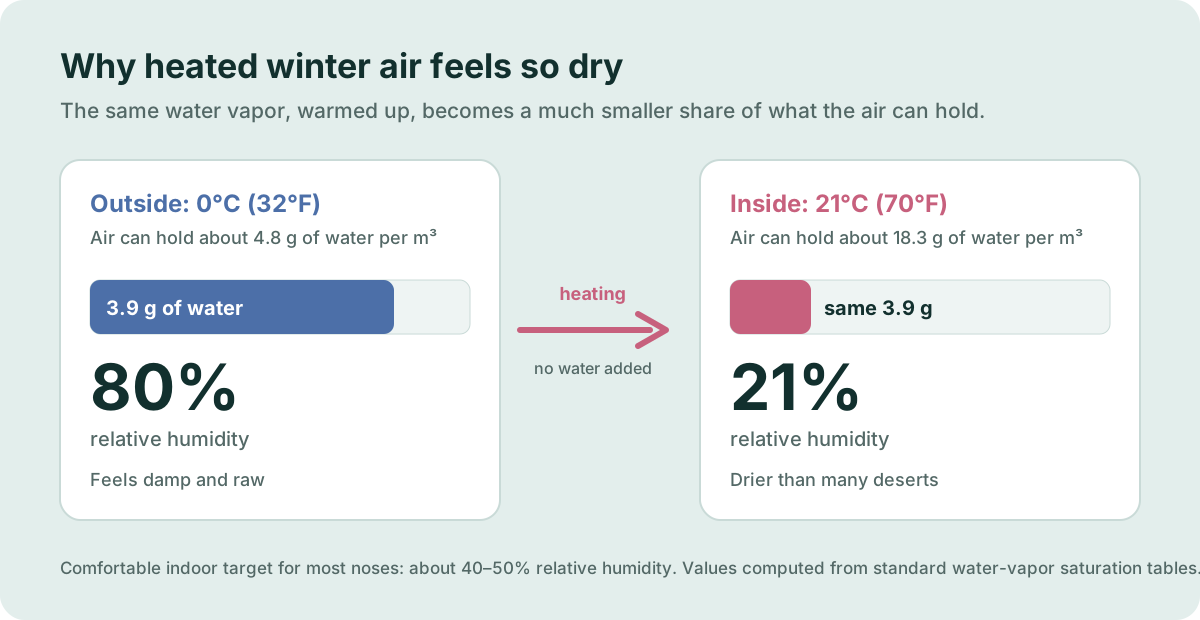
Cold air is part of the problem even before heating comes in. Cold air simply cannot hold much water, so even if outdoor relative humidity looks high on a weather app, the actual amount of moisture in the air is low. Warm that air up indoors and its relative humidity drops sharply.
What the studies show about winter and nosebleeds
Researchers have looked at this by matching emergency room visits for nosebleeds (epistaxis) against local weather.
- In Saint John, New Brunswick, a review of 476 emergency cases found the highest number of nosebleeds in winter, and visits rose as mean daily humidity fell.
- In Alberta, a larger review of 4,315 patients found that colder months and colder days were linked to more nosebleed visits. Humidity alone did not show a clear link there, which researchers think may reflect how dry Alberta's air is year-round.
A large Stanford analysis of more than 180,000 children went further and found that the effect of humidity depends on climate zone. The overall pattern holds, though: winter is when noses tend to suffer most.
Habits that help with everyday dryness
None of these are complicated, and most people do best with a combination.
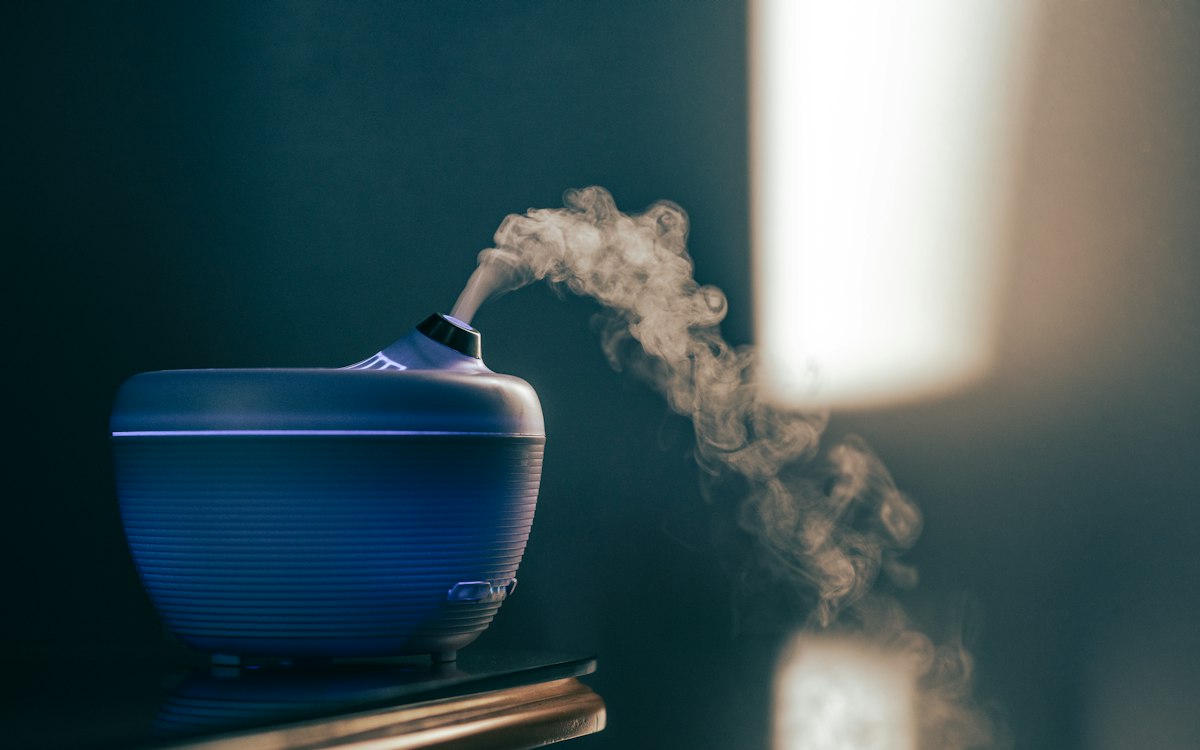
Add moisture where you sleep. A cool-mist humidifier in the bedroom matters more than one in the living room, because you spend seven or eight hours breathing that air. Aim for roughly 40 to 50 percent relative humidity and clean the tank often.
Drink enough water. Hydration will not fix a dry nose by itself, but being dehydrated makes the lining dry faster.
Be gentle. Blow softly, one nostril at a time. Trim fingernails if picking at crusts is a habit, especially for kids.
Moisturize the lining directly. Saline sprays rinse and briefly wet the nose. Oil-based moisturizers stay longer. In a randomized crossover trial in northern Sweden during a dry spring, 79 people with nasal dryness used pure sesame oil for two weeks and saline for two weeks. Dryness, stuffiness and crusting all improved more with the oil, and 8 in 10 participants said their symptoms got better with it, compared with 3 in 10 with saline.
When dryness is a sign of something else
Dryness that comes and goes with the season is common. Talk to a doctor if you notice any of these:
- A nosebleed that keeps going after 20 minutes of steady pressure on the soft part of the nose
- Nosebleeds that happen often, especially from the same side
- Bleeding after a blow to the face or head
- Dryness alongside blocked breathing on one side, facial pain, or a change in your sense of smell
- Nosebleeds while taking blood thinners
Some medicines, including antihistamines, decongestant sprays used for more than a few days, and certain acne and blood-pressure drugs, can also dry out the nose. A pharmacist can tell you whether something you take is likely to.
Common questions
Why does my nose get dry at night in winter?
Indoor heating lowers relative humidity, and many people breathe partly through the mouth while asleep. Both dry out the front of the nose overnight, which is why it often feels worst in the morning.
Can dry air cause nosebleeds?
It can contribute. When the nasal lining dries and cracks, the small blood vessels near the front of the nose are easier to break. One study in New Brunswick found nosebleed visits were highest in winter and rose as daily humidity fell.
What indoor humidity is best for a dry nose?
Many clinicians suggest keeping indoor relative humidity around 40 to 50 percent in winter. Going much higher can encourage mold and dust mites, so use a hygrometer to check.
Is it safe to put oil in your nose?
Nasal oils made for the purpose, used as directed, are common for dryness. A randomized crossover trial found pure sesame oil relieved winter nasal dryness better than saline. Avoid petroleum jelly deep inside the nose and ask a doctor first if you have a medical condition.
Sources
- Examining seasonal variation in epistaxis in a maritime climate. Journal of Otolaryngology – Head & Neck Surgery, 2019
- Role of season, temperature and humidity on the incidence of epistaxis in Alberta, Canada. Journal of Otolaryngology – Head & Neck Surgery, 2014
- Environmental Risk Factors for Pediatric Epistaxis vary by Climate Zone. The Laryngoscope, 2024
- Pure sesame oil vs isotonic sodium chloride solution as treatment for dry nasal mucosa. Archives of Otolaryngology – Head & Neck Surgery, 2001
Articles are for general information, not medical advice. See a doctor for symptoms that are severe, persistent, or one-sided. Last updated October 22, 2026.